In November 1923, a golden-brown Akita puppy was born on a farm in northern Japan. A few months later, he was sent south to Tokyo, to the home of Hidesaburō Ueno, a professor of agriculture at the Imperial University. The professor named him Hachi — with the affectionate "kō" added later by those who loved him — and the two became inseparable.
A ritual of love
Every morning, Hachikō walked with Professor Ueno from their home to Shibuya Station, watching him disappear into the crowds and onto his train. And every afternoon, without fail, the dog returned to the station at the same hour — sitting patiently by the exit, eyes fixed on the streams of commuters, waiting for one particular face. When Ueno appeared, Hachikō's joy was total: tail wagging, whole body trembling with happiness. It was their ritual, and it never varied.
Then came May 21, 1925. That morning, the professor left for the university as always. Hachikō waited at the station that afternoon — but the familiar figure never stepped off the train. Professor Ueno had suffered a sudden cerebral hemorrhage while giving a lecture. He died that day, without ever coming home.
He waited anyway
Hachikō was given away to new homes, but he kept escaping — and every time, he made his way back: to the professor's old house, and then to the station. Day after day, he took up his post at Shibuya at the hour the train came in. Rain soaked him. Snow covered him. Summers and winters passed. The station workers, who at first shooed him away, began to feed him and look out for him. Commuters came to know the old dog who waited for someone who would never arrive.
He never understood death. He only understood that his best friend was late — so he waited, for nearly ten years.
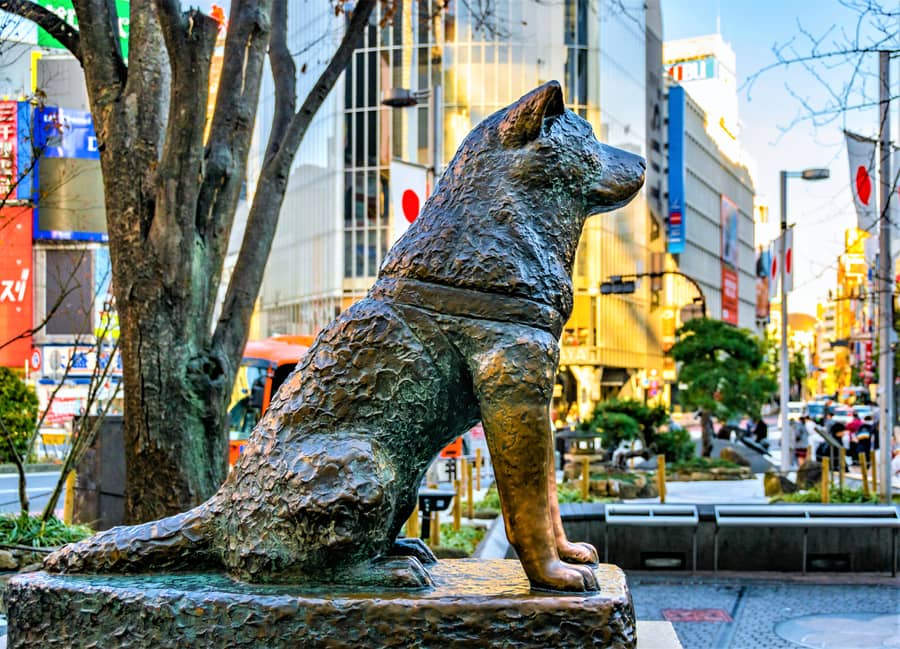
In 1932, a newspaper told Hachikō's story, and all of Japan fell in love with him. He became a national symbol of loyalty and devotion. In 1934, a bronze statue of Hachikō was unveiled at Shibuya Station — and Hachikō himself was present at the ceremony, sitting beside his own likeness, still waiting.
The wait comes to an end
On March 8, 1935 — nearly ten years after his master's death — Hachikō was found in a street near the station. He had died, still faithful to the very end, having spent almost a third of his life keeping an appointment that only he remembered. Japan mourned him. His remains were laid to rest beside Professor Ueno's grave — the two of them, together at last.
Today, Hachikō's statue is one of Tokyo's most beloved landmarks, the city's most famous meeting point, and a place where people from all over the world come to honor a simple, staggering truth: a dog's love does not end. It does not even slow down. It just waits — patiently, hopefully, forever — at the station, at the usual hour, for you.